
Last updated November 21, 2026
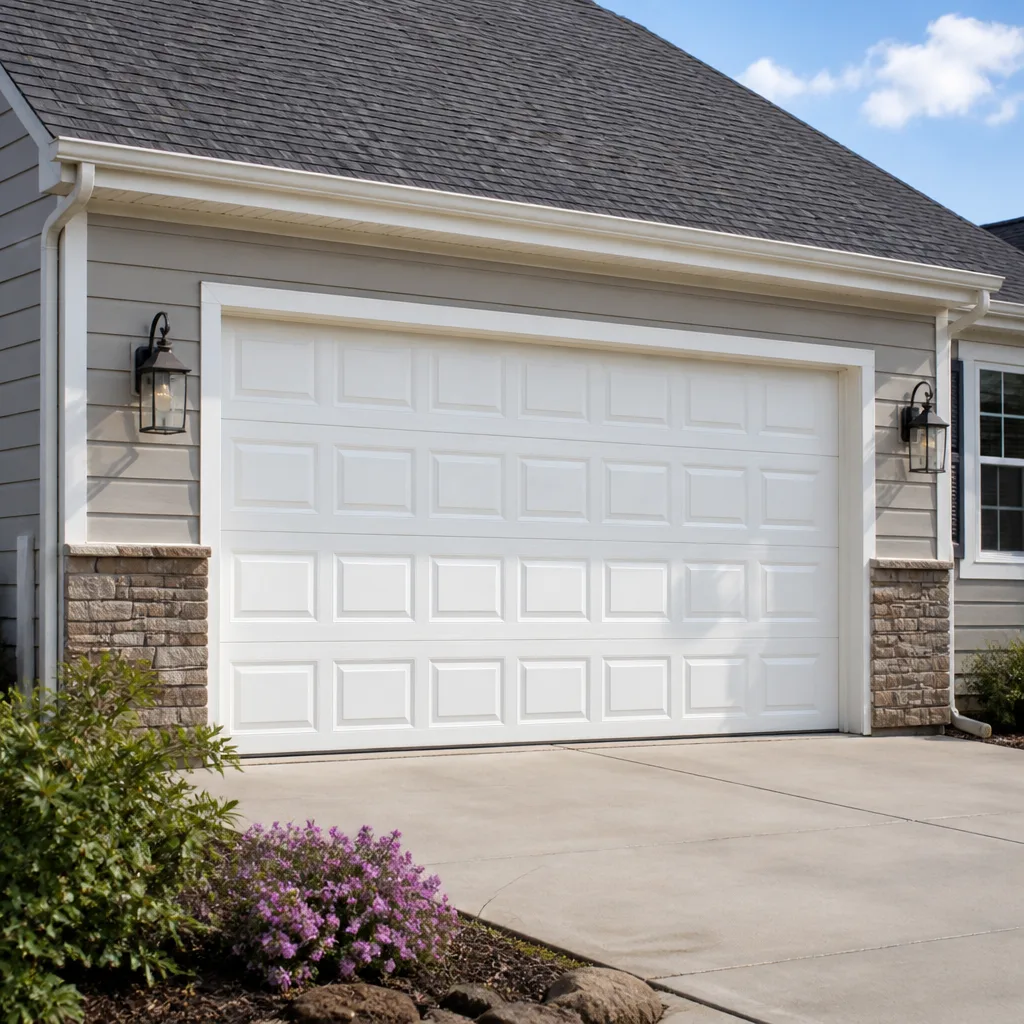 Raised-panel steel
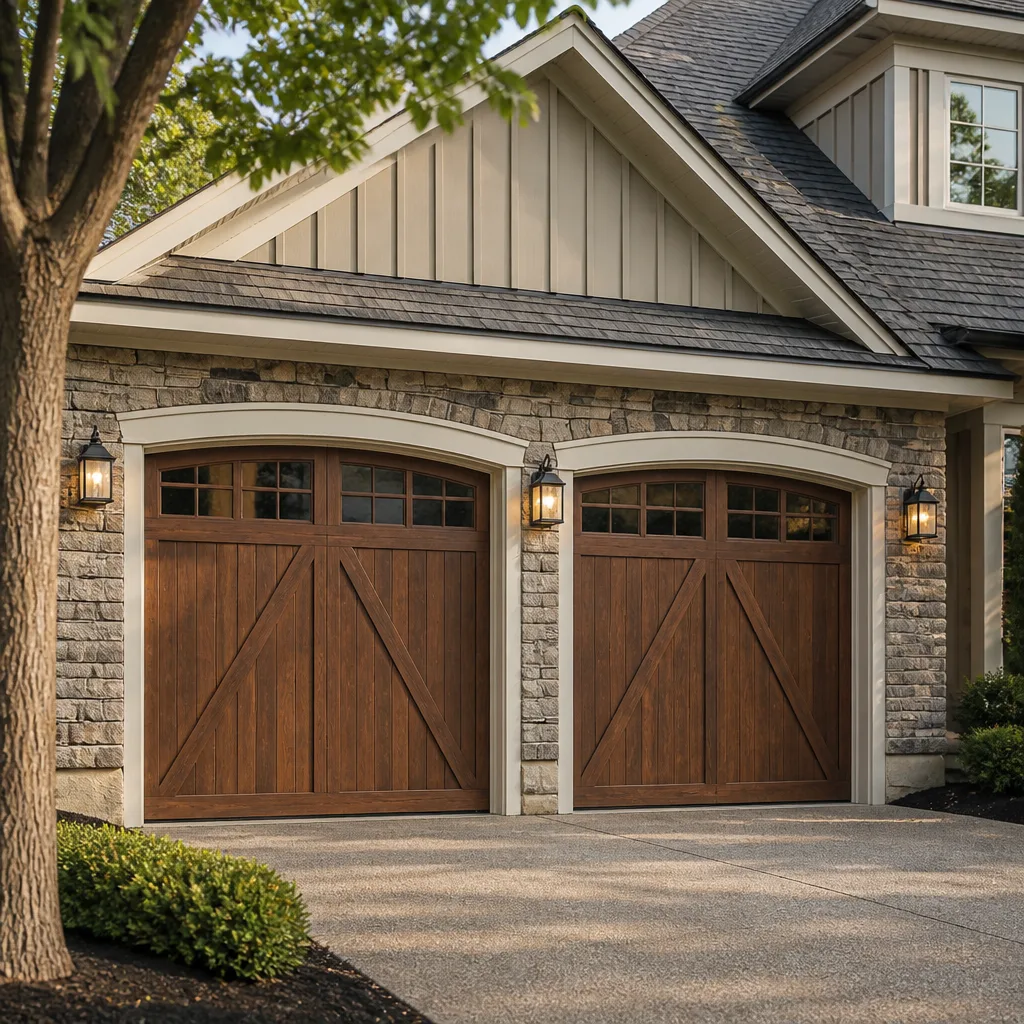 Carriage house
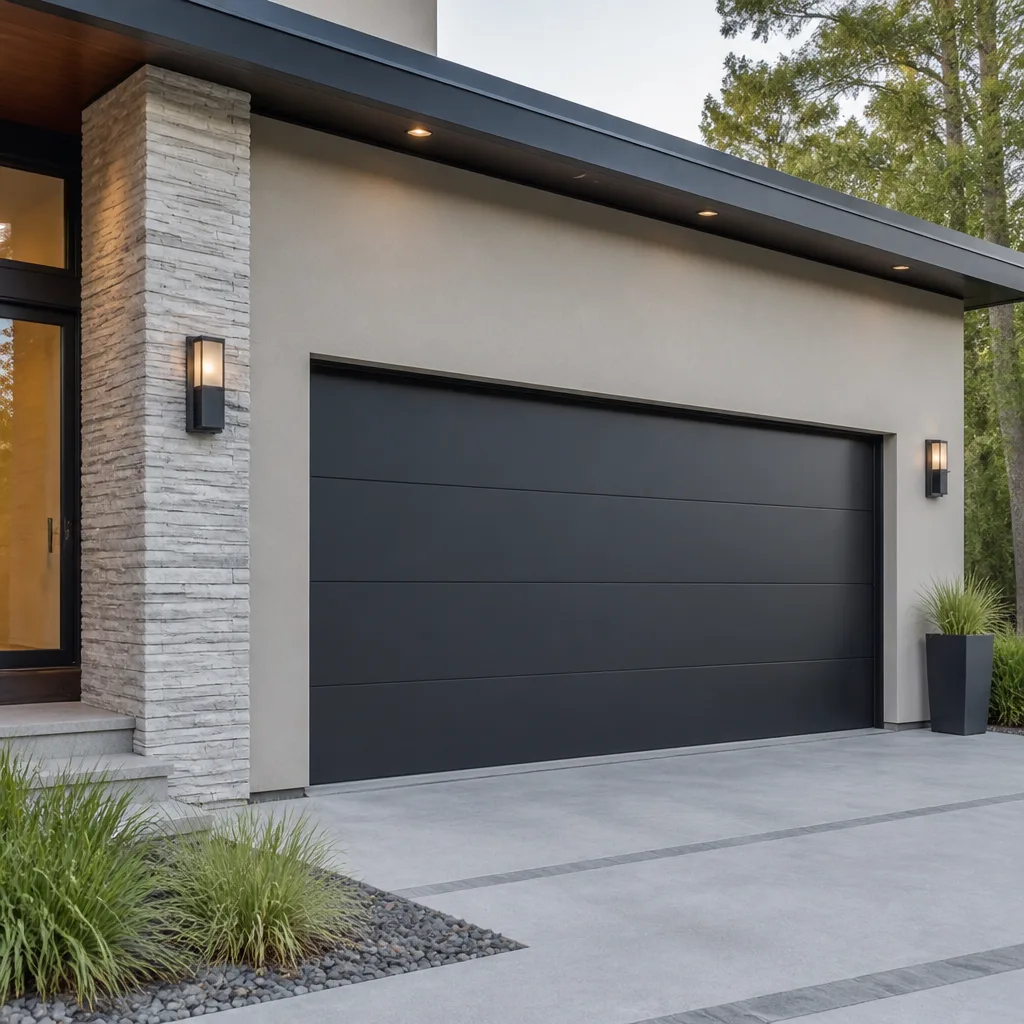 Modern flush
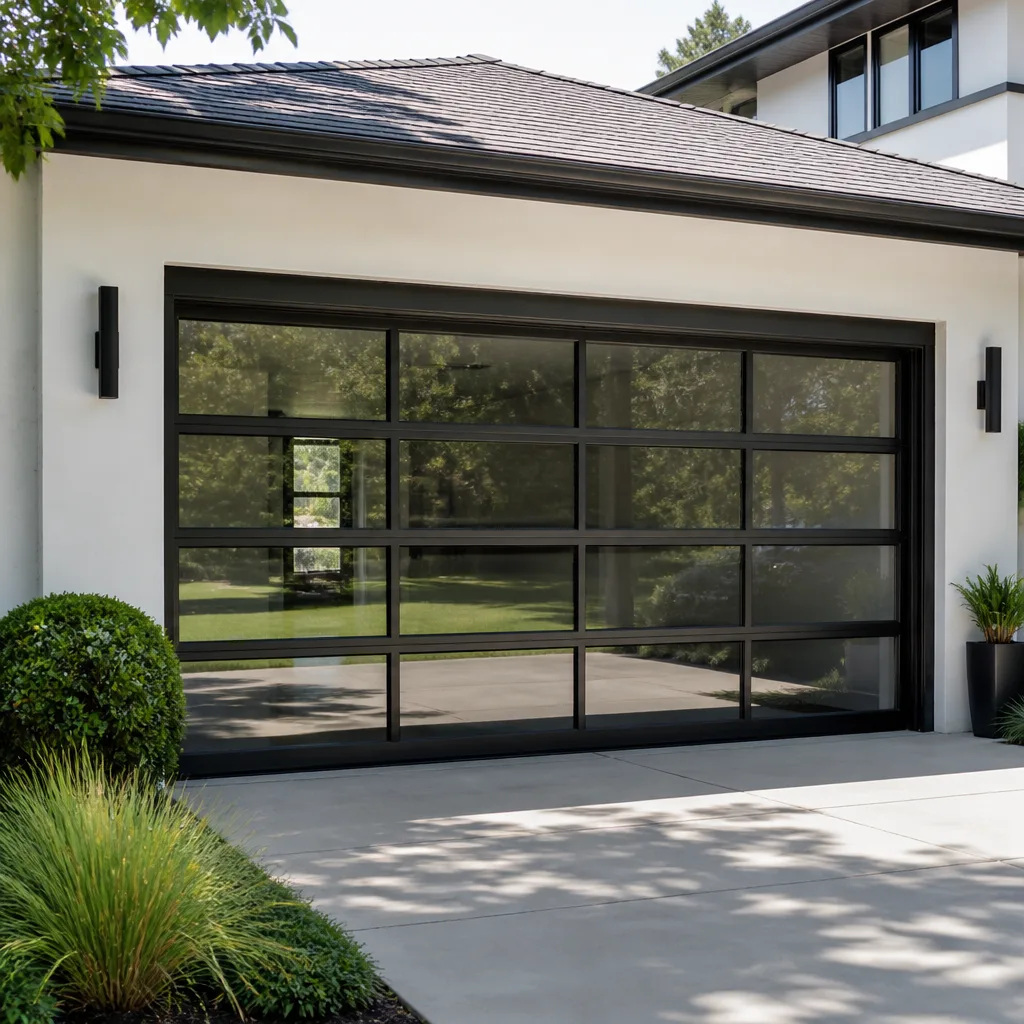 Full-view glass
 LiftMaster openers
 Chamberlain openers
Full 25-point door and opener safety check with every visit - springs, cables, rollers, tracks, and your LiftMaster or Chamberlain opener included
You get a price before we start. It does not change when the pro arrives.
Get your free estimateGarage Door Repair Maintenance Checklist for Auburn Homeowners
The number-one repair call Auburn technicians get isn’t a broken spring. It’s a problem that a 60-second monthly check would have caught six months earlier. Torsion springs, cables, and bottom seals all announce their failure long before they quit, but only to someone who knows where to look and when. This guide is built around the failure points we actually find in Auburn garages, ranked by how much damage a skipped check causes and what the repair costs when it finally gives out. You’ll get the specific intervals, the test methods, and the warning signs that matter – not the generic manufacturer’s pamphlet.
Quick Answer
A garage door maintenance checklist for Auburn homeowners should cover five checks: a monthly visual inspection of springs, cables, and rollers; lubrication every three months with a silicone-based spray; a balance test twice a year; bottom seal inspection every season; and a full professional tune-up once a year. The checks are ranked by failure frequency, so seal and cable problems come first. Every check on this list takes under ten minutes and prevents repairs that run into the hundreds of dollars.
Styles & brands we work with
- Raised-panel steel
- Carriage house
- Modern flush
- Full-view glass
- LiftMaster openers
- Chamberlain openers
Table of Contents
- Why Regular Garage Door Maintenance Matters in Auburn
- The Ranked Maintenance Checklist for Auburn Homeowners
- The Lubrication Schedule Auburn’s Temperature Swings Demand
- How to Check Your Bottom Seal Before Concrete Settling Ruins It
- The Cable Inspection Step Everyone Skips
- What a Proper Balance Test Looks Like and What ‘Failed’ Means
- A Seasonal Maintenance Calendar for Auburn Weather
- When Maintenance Becomes a Repair Call
Why Regular Garage Door Maintenance Matters in Auburn
Auburn’s climate is hard on garage doors in a way that most national maintenance guides never account for. We get wet winters with near-constant drizzle from October through March, temperatures that hover just above freezing for weeks, then slide into dry summer stretches with repeated temperature swings between cool nights and warm afternoons. Metal expands and contracts with that rhythm every single day. Lubricant that was right for a mild climate gets pushed out of hinges and rollers faster here, and the rubber at the bottom of the door stiffens, cracks, and pulls away from the concrete.
Add the other local variable: Auburn sits on ground that moves. Between the older hillside neighborhoods and the clay-heavy soils in the valley, foundation and slab settling is common enough that garage slabs are rarely perfectly level. That unevenness is why bottom seals fail here faster than the manufacturer expects. The door comes down, the seal meets high concrete on one side and low concrete on the other, and one end takes the whole load. It wears through long before the other end shows any wear at all.
None of that is a reason to dread your door. It’s a reason to check it on a schedule that fits Auburn instead of a schedule written for a mild, stable climate somewhere else. The checks below are the ones that pay for themselves in avoided repair bills.
What a monthly check actually prevents
- A seal that’s torn lets rain and cold air into the garage, which drives up heating costs and can let water pool along the slab edge.
- A worn roller or dry hinge adds vibration that accelerates wear on the opener’s drive components.
- A frayed cable spotted early is a cheap replacement; a snapped cable is a same-day emergency call and often damages the door panel it whips against.
- An unbalanced door strains the opener motor until it fails, which turns a spring check into a full opener repair.
The point isn’t to make you a technician. It’s to catch problems while they’re still small, before they move into the category of garage door repair that costs real money.
The Ranked Maintenance Checklist for Auburn Homeowners
Most checklists organize by alphabetical order or by what’s easiest to write. This one is ranked by what actually fails in Auburn garages and what each failure costs when it’s ignored. Work down the list in order – the items at the top are the ones that go wrong most often and damage the most when they do.
- Bottom seal integrity (check monthly). The fastest-failing component on an Auburn door. Concrete settling plus wet winters means seals tear and pull away. A failed seal lets water, cold air, and pests in, and it costs far more to deal with the resulting moisture than it does to replace the seal.
- Cable condition (check monthly). Cables look fine until they snap, and the snap is violent. Inspect for fraying, kinks, or slack near the drum. Never touch a cable that’s under tension – that’s a professional job.
- Balance and spring tension (test every six months). An unbalanced door strains everything downstream. The test is simple; the repair is not.
- Lubrication (apply every three months). Auburn’s temperature swings push lubricant out of hinges and rollers faster than in mild climates. Dry metal grinds, and grinding wears parts.
- Roller and hinge wear (inspect every six months). Steel rollers with worn bearings are the most common cause of a noisy door. A cheap fix caught before it damages the track.
- Track alignment (inspect every six months). Look for dents, bends, and gaps between the roller and the track. A misaligned track is often a symptom of something else – a bent panel, a loose bracket, or impact damage.
- Weatherstripping and side seals (inspect every season). The vertical seals around the frame wear down from repeated contact. A two-dollar fix that keeps the rain out.
- Opener force and safety reverse (test monthly). A door that doesn’t reverse on contact with an object is a genuine hazard. This is a two-minute test that protects everyone in the household.
- Hardware tightness (check every six months). Vibration loosens bracket bolts and hinge screws. A quick pass with a wrench prevents panels from sagging.
- Paint and panel condition (inspect annually). Auburn’s wet winters are hard on steel doors. A chip in the paint becomes a rust spot, and a rust spot spreads. Touch-ups are cheap.
That’s the list in priority order. The next sections break down the three checks that homeowners most often skip or perform wrong: lubrication, the balance test, and the cable inspection.
The Lubrication Schedule Auburn’s Temperature Swings Demand
Most manufacturers recommend lubricating a garage door every six months. In Auburn, we recommend every three months, and here’s why. The seasonal swing from wet, cold winters to dry summer heat is hard on lubricant. Cold thickens it and pushes it out of tight clearances. Warm dry air then lets it evaporate or dry out entirely. By the time six months have passed, the hinges and rollers are grinding metal on metal, and that grinding is quietly wearing the parts down.
The right lubricant matters as much as the schedule. Use a silicone-based spray or a lithium grease designed for garage door hardware. Avoid WD-40 as a lubricant – it’s a solvent and displaces the oil you actually need. Avoid heavy axle grease too; it collects grit and turns into a paste that wears parts faster than dry metal.
Where to lubricate
- Hinges: a short spray on each hinge pivot point. Every hinge gets it, not just the noisy ones.
- Rollers: a drop on the bearing of steel rollers. Nylon rollers generally don’t need lubrication – check your door’s type first.
- Track: a light wipe-down with a silicone-dampened cloth. Do not grease the track; grease collects dirt and the rollers start to slide instead of roll.
- Torsion spring: a light coat on the coils. This is a slider on a winding bar, not a technician’s job – skip it if you’re not comfortable.
- Opener chain or screw: manufacturer-specified lubricant, applied sparingly. If you have a belt-drive opener, check the manual first – most belt drives don’t need lubrication.
We see doors from Amarr, Wayne Dalton, Clopay, and Raynor regularly in Auburn, and the lubricant needs vary a little between models. The door hardware is similar; the opener side can differ. If you’re unsure what’s right for your setup, a technician can walk through it during a routine visit and leave you knowing exactly what to apply.
One more thing to watch in Auburn: check the lubricant condition after the first cold snap of the year. If it has turned to a sticky film, it needs to be wiped off and reapplied before the winter grind sets in.
How to Check Your Bottom Seal Before Concrete Settling Ruins It
The bottom seal is the rubber strip that runs along the bottom edge of your door. It’s also the fastest-wearing component on an Auburn garage door, and concrete settling is the reason. When a slab shifts, the door no longer sits evenly. One end of the seal compresses hard; the other ends up barely making contact. The compressed end wears through in a fraction of the time the other end would take to fail. If you have an older home, or your garage slab has visible cracks or heaves, your seal is working harder than it should.
How to check the seal properly
- Close the door fully. Stand inside the garage with the lights off (or block the outside light temporarily).
- Look for daylight showing along the bottom edge. Any visible daylight is a gap that lets water, cold air, and pests in.
- Run your hand along the seal on the inside; you’ll feel hard, brittle, or cracked sections. Note where the seal is stiff versus pliable.
- Look at the concrete under the door. If there’s a wear line on one side only, that end is carrying all the contact load and failing early.
- Check the corners. The ends are where seals tear first – a torn corner spreads with every cycle.
A healthy seal is soft, pliable, and touches the floor evenly. A failing seal is hard, cracked, or uneven. A torn seal should be replaced within a few weeks – it’s not an emergency, but it gets worse with every opening and closing cycle.
Replacement is a genuine homeowner job for some doors and best left to a technician for others, especially if the door has an unusual threshold profile or the slab is badly out of level. If the concrete is uneven enough that a new seal would fail within a year, the right answer might be a thicker or adjustable seal, or a threshold adjustment. A technician can tell you which during a routine visit.
The Cable Inspection Step Everyone Skips
Cables are the most-skipped check on any garage door maintenance list, and that’s exactly why they cause some of the most expensive repairs. A cable doesn’t slowly wear out in a way you’ll notice. It frays quietly, hides that fray behind the drum, and then snaps – sending the door crashing down or twisting a panel. The good news is that cables are visually inspectable. The bad news is that most people don’t know what to look for, or don’t look at all.
What to check, without touching anything under tension:
- Fraying: look for broken strands along the length of the cable. Even one broken strand is a warning sign that a failure is coming.
- Kinks: a sharp bend weakens the steel. A kinked cable is on its way to breaking.
- Slack: a cable should be under even tension across both sides. Uneven slack suggests a spring imbalance or a problem at the drum.
- Rust: Auburn’s wet winters plus any garage condensation can rust a cable from inside the sheath. Rust means replacement.
- Drum seating: the cable should spool evenly on the drum. If it’s piling up on one side, stop – that’s a problem for a technician.
Be clear about the limit here: inspecting a cable is safe. Touching one is not. A garage door cable is under hundreds of pounds of tension, and releasing that tension unexpectedly can cause serious injury. If a cable is damaged, stop using the door and call for garage door spring repair – cables and springs are part of the same high-tension system and are usually serviced together.
What a Proper Balance Test Looks Like and What ‘Failed’ Means
The balance test tells you whether your springs are still doing their job. It’s simple: pull the door up manually about halfway and let go. A balanced door should stay where you left it, more or less, without drifting up or down on its own. A door that sinks slowly, springs up on its own, or feels heavier than it should has failed the test.
How to run the test
- Open the door using the opener or manually, then pull the release cord to disconnect the door from the opener.
- Lift the door to approximately halfway up. Use a firm grip on the bottom edge.
- Let go. Step back.
- Watch. The door should stay put without help. A balanced door might drift slowly by a few inches – that’s within normal.
- Close the door slowly and watch for uneven speed, wobbling, or a section that seems to stick.
- Pull the door back up and reconnect the opener by lifting the door fully until you hear the carriage click back in.
What ‘failed’ actually means
If the door sinks on its own, the springs are losing tension – a repair that needs a technician, not a homeowner adjustment. If the door rises on its own, the springs are overtightened or the spring is the wrong size for the door. If the door is heavy and won’t lift easily, the spring has failed. All three outcomes mean a spring issue and a visit from someone who works on them safely.
Springs are the most dangerous component on the door. Don’t attempt a balance adjustment yourself; if the test fails, have a technician look at it. Our technicians have up to 14 years of experience with garage door spring repair and handle the high-tension work safely. A balance test takes five minutes and tells you in advance whether you’re dealing with an imbalance, a worn spring, or something else in the track and opener.
A Seasonal Maintenance Calendar for Auburn Weather
A calendar makes the checklist actionable. Auburn’s weather pattern has a specific rhythm – wet and cold from late fall through early spring, then a dry, warm summer with sharp day-night temperature swings. The schedule below matches the checks to those seasons, so you’re not trying to remember when to do what. It also maps onto the failure windows we see most in Auburn doors.
The schedule
- Monthly (year-round): bottom seal daylight check, safety reverse test, visual cable inspection, and a listen for new noises. That’s under ten minutes.
- Every three months: full lubrication pass on hinges, rollers, and track. This matters most in late fall, right before the wet winter, and again in late spring after the wet season.
- Twice a year (spring and fall): balance test, hardware tightness check, roller and hinge inspection, track inspection. Fall is the most important pass – it gets the door ready for the wet season and catches wear before it becomes a winter failure.
- Annually: professional tune-up, a full inspection of springs, cables, and opener components, and a paint and panel assessment for steel doors. Do this in early fall so the door is in shape for the wet months.
- After any big temperature swing (first cold snap, first hot week): a quick lubrication check and a visual pass. The metal has just moved; a check now catches small problems early.
Pair the schedule with the actual weather in Auburn rather than a fixed calendar date. When the wet season starts, that’s when the fall tune-up should happen. When the dry heat arrives, check the seal and hinges – the expansion phase of the year is when loose hardware and slacking springs show up.
Where the neighborhoods fit in
Houses on Auburn’s hillside streets tend to have more slab movement than the flatter valley neighborhoods, so bottom seals fail faster there. Homes in the older parts of town often have heavier wood or steel doors that put a bigger load on the springs. Newer builds tend to have better-sealed garages and aluminum doors that hold up a little differently. Adjust your schedule to what your door is actually doing – not the calendar alone.
When Maintenance Becomes a Repair Call
Some problems are maintenance. Others are repair, and a few are genuine safety calls that shouldn’t wait. The line between them is clear enough once you know it.
- Any frayed cable or kinked cable: stop using the door and call a technician. A cable is a safety-critical component and needs professional replacement.
- Broken spring (door won’t lift, or a loud snap from above): do not use the opener or try to lift the door manually. Call for spring replacement.
- A door that won’t reverse on contact with an object: a failing safety reverse is a genuine hazard. Turn off the opener and call for garage door opener repair.
- A door that sticks, jumps, or runs unevenly: often a track or roller issue that comes up during the tune-up.
- A bent panel or a door that’s been bumped by a car: a same-day call, because the door can’t run safely on a bent track.
- An opener that won’t respond or runs by itself: a circuit or limit issue that a technician can diagnose on the visit.
Auburn Garage Door Repair Co works on the brands already in your garage – we’re certified to work on LiftMaster, Chamberlain, Genie, Clopay, Amarr, Wayne Dalton, Craftsman, and Raynor – so the technician who arrives can diagnose the actual equipment rather than recommending a replacement because the brand isn’t familiar. We handle repair and installation under one company, so a tune-up visit that turns into a spring replacement doesn’t send you looking for a second business. Every estimate is free, and the price is written down and agreed before any work starts. Call (833) 680-0666. We answer 24/7, with fast dispatch from 7am to 7pm, Sunday through Friday.
Common Mistakes to Avoid
- Only looking at the door when it stops working. The failures we see most in Auburn were visible for months before they stopped the door. The seal and cable checks catch them while they’re still cheap to fix.
- Lubricating the track with grease. Grease collects dirt, the rollers start sliding instead of rolling, and the door gets noisier. Clean the track with a silicone-dampened cloth and leave the grease for the hinges.
- Using WD-40 as a garage door lubricant. It’s a solvent, not a lubricant. It drives out the oil you need and leaves the hinges drier than before.
- Ignoring a bottom seal that’s torn at one end. Auburn’s settling slabs make this the most common seal failure. A torn end spreads with every cycle and lets water and cold air into the garage long before the whole seal gives out.
- Adjusting springs or cables yourself. This is the mistake most likely to cause a serious injury. Springs and cables are under hundreds of pounds of tension. If they need work, they need a technician.
- Skipping the safety reverse test. A door that doesn’t reverse on contact is a hazard to kids, pets, and anyone who happens to be under it. Test it every month – the test takes two minutes.
- Waiting for a small problem to become a big one. A worn roller, a sticky hinge, or a slightly buzzing opener is usually a small, cheap fix. Left alone, each one causes downstream damage that costs far more.
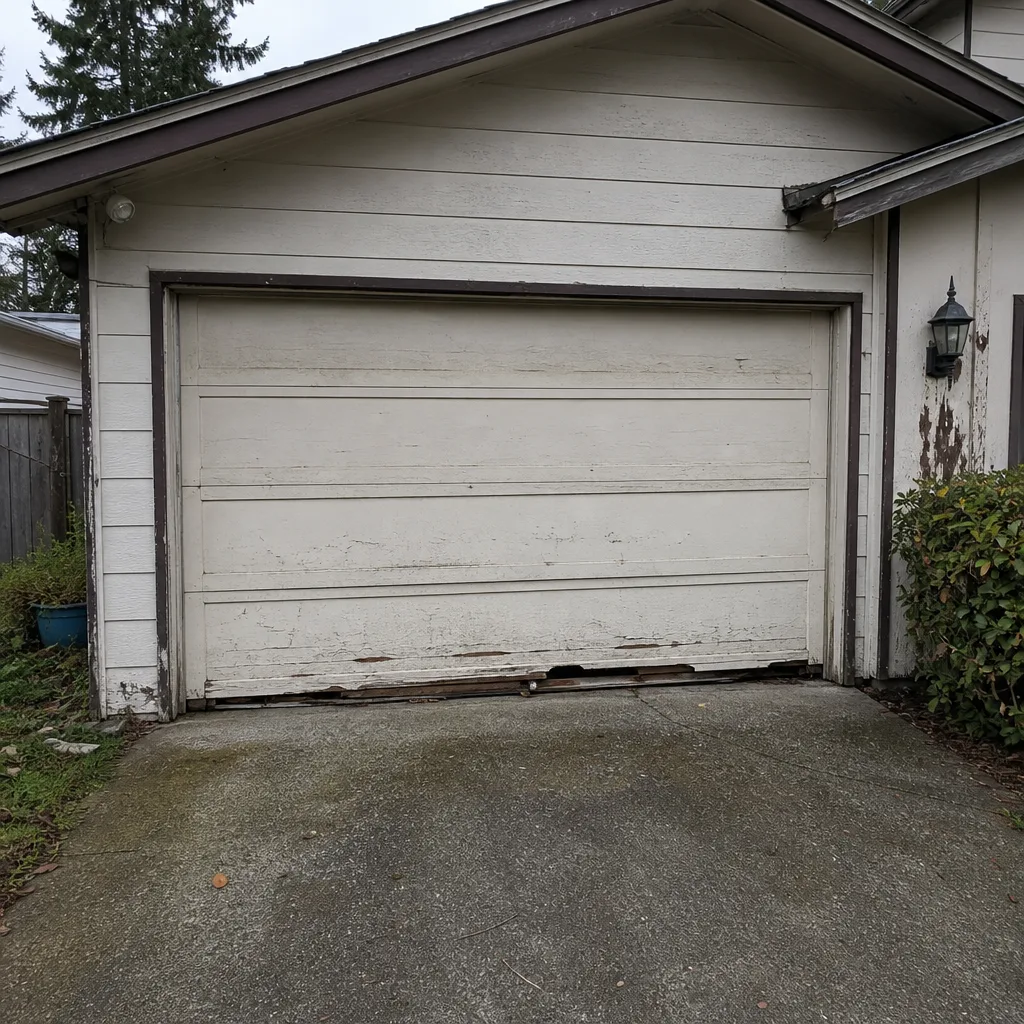
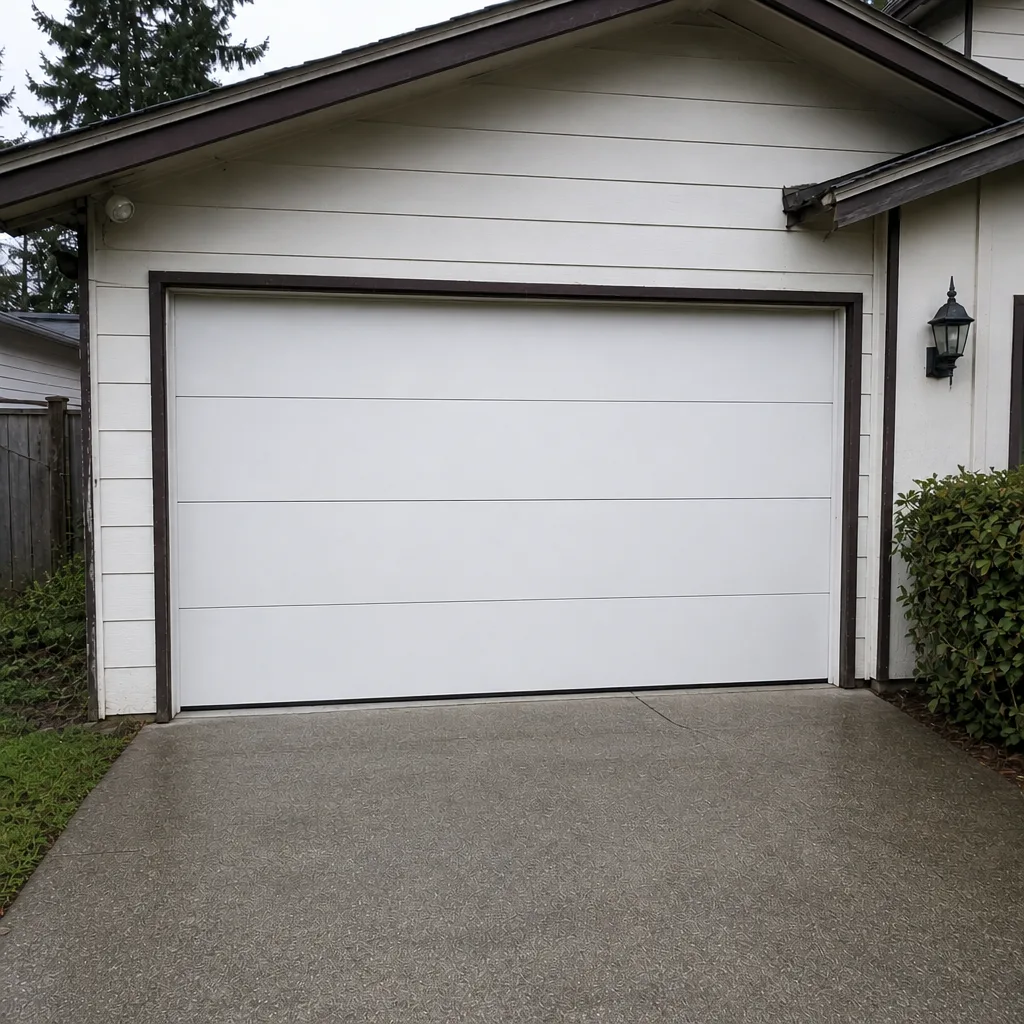
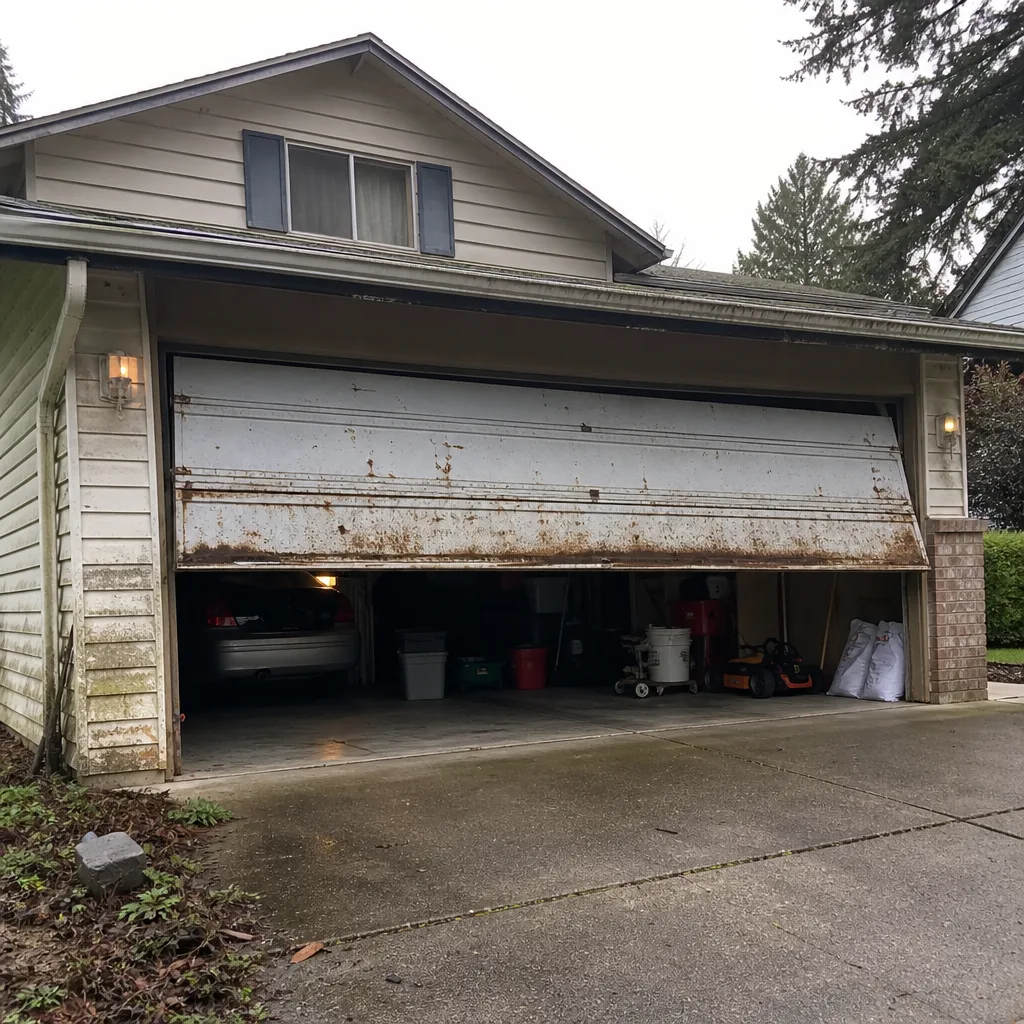
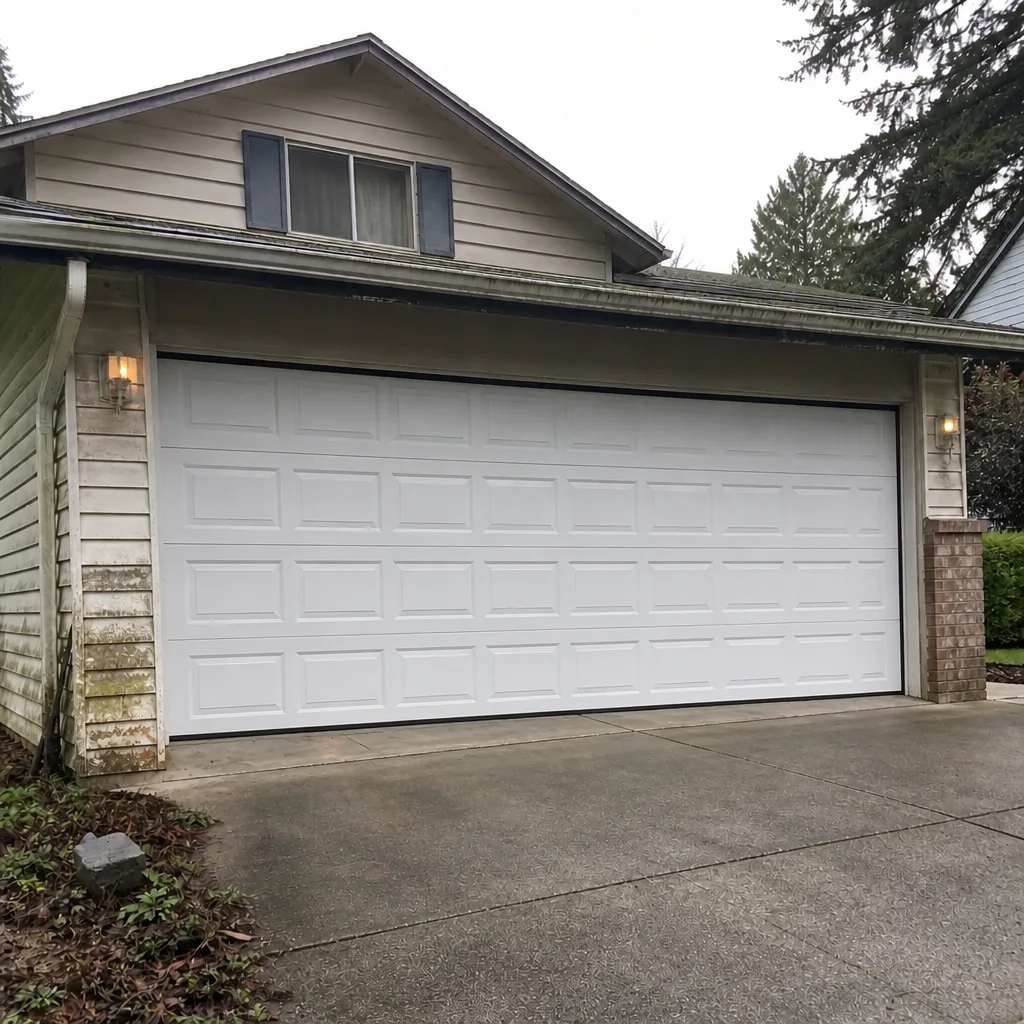
See the difference
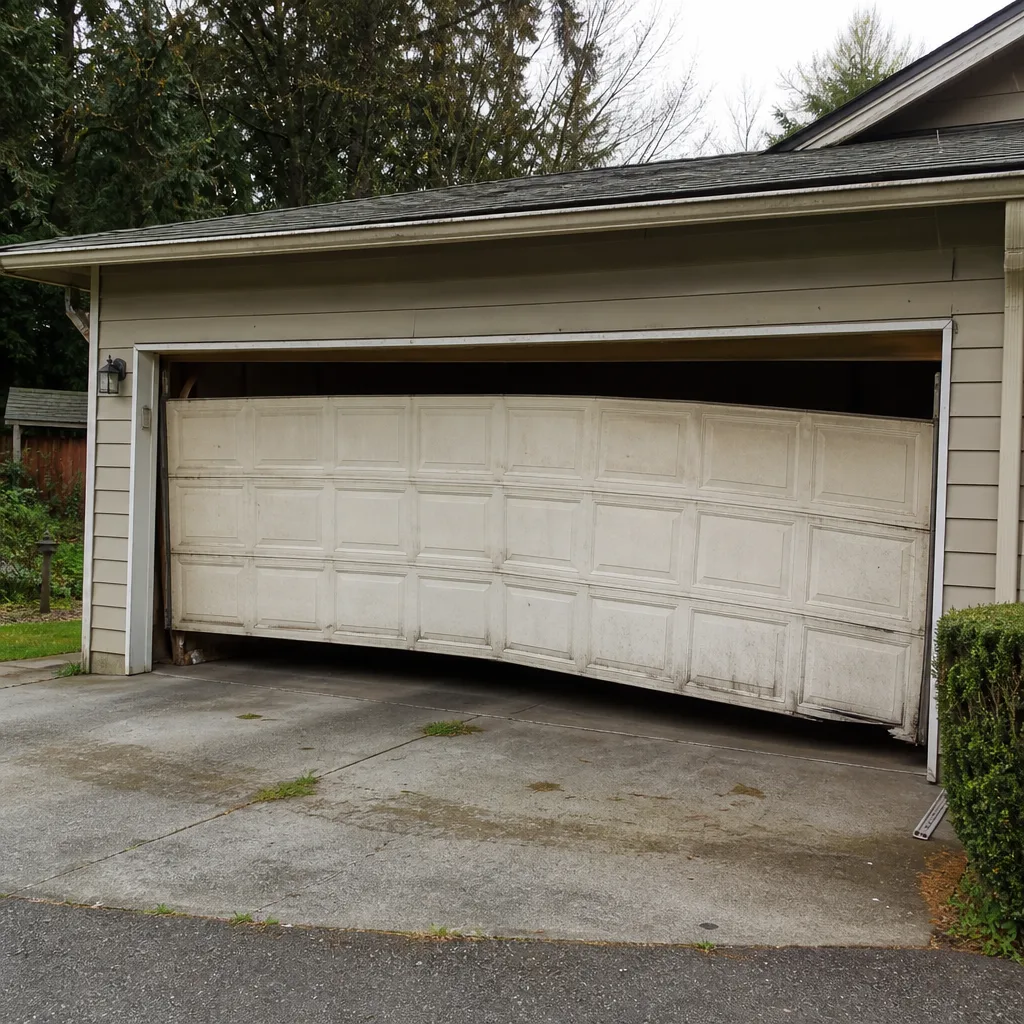 Before
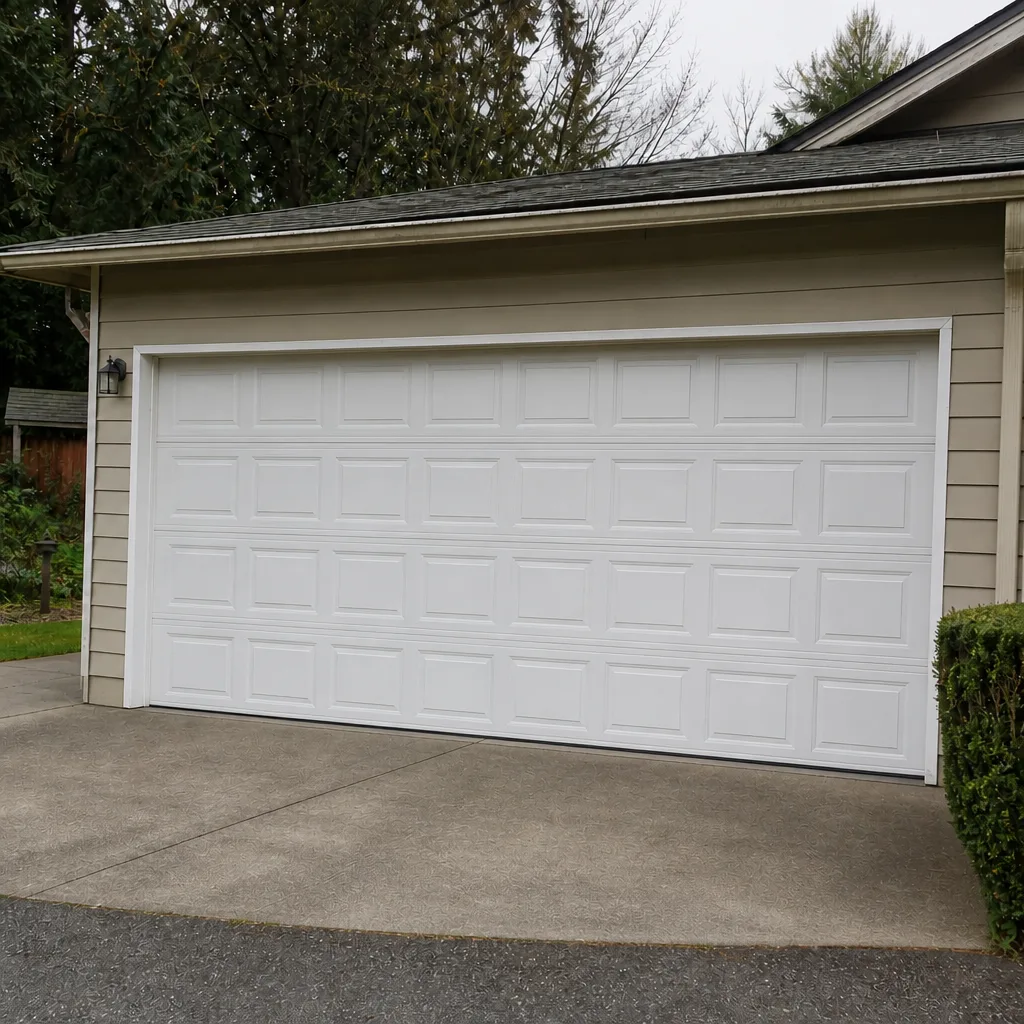 After
 Before
 After
 Before
 After
When to Call a Professional
Call for anything involving a spring, a cable, or a door that won’t lift or won’t stay up. Those are the jobs where a homeowner can genuinely get hurt, and they’re the jobs that a generalist handyman shouldn’t touch. Call for a frayed cable, a snapped spring, a bent track, a door that’s been hit, an opener that runs on its own, or a door that won’t reverse. Any noise you can’t identify that comes from above the door is worth a call – a technician can tell you in a few minutes whether it’s a bearing, a roller, or the start of something bigger. And call if the balance test fails, or if the seal is torn badly enough that you can see daylight under the door and feel cold air coming in. Auburn Garage Door Repair Co offers free estimates in Auburn – call (833) 680-0666. We answer 24/7, with fast dispatch from 7am to 7pm, Sunday through Friday.
Frequently Asked Questions
Every three months – more often than the manufacturer’s typical six-month recommendation. Auburn’s temperature swings from wet cold to dry heat push lubricant out of hinges and rollers faster than a mild climate does, and a quarterly schedule keeps the moving parts protected.
You usually can’t predict it directly – springs fail without announcing themselves. But a failing balance test, a heavier-feeling door, or a small gap and loose winding on the coil are warning signs. If the door won’t stay halfway and sinks on its own, the spring is losing tension and should be inspected.
Concrete slab settling is the main reason. Auburn’s soils and older homes mean many garage slabs shift enough that the door no longer sits evenly, so one end of the seal compresses hard and wears through quickly. A seal that’s torn at one corner and fine at the other is the classic sign of a settling slab.
The checklist items – lubrication, seal inspection, balance test, safety reverse test, hardware tightness – are safe for a homeowner to do. Spring, cable, and opener adjustments are not. If the door has a spring or cable problem, that’s a technician call.
With the checks above, most residential doors last well beyond what a neglected door will reach. The springs on the door usually fail first, and seal replacement is the most frequent ongoing repair. Regular lubrication and a fall tune-up are what keep the mechanical parts from wearing early.
Our estimates are free, and the price is set per job by a written estimate given before any work starts. Call (833) 680-0666 for a specific quote on your door.
The Bottom Line
Garage door maintenance in Auburn comes down to a short list of checks done on a schedule that matches the local climate. The bottom seal and cables go first – check them monthly. Lubricate every three months because the temperature swings drive lubricant out faster here than elsewhere. Run the balance test twice a year, do a full tune-up in the fall before the wet season, and never adjust a spring or cable yourself. Every check on this list takes under ten minutes, and every one prevents a repair that costs more than the check would have. The door that gets checked is the door that doesn’t surprise you. If a check turns up something that needs a technician, that’s what we’re here for. Call (833) 680-0666 for a free estimate and a visit from a specialist who works on the brand already in your garage.
Written by the team at Auburn Garage Door Repair Co.