
Last updated November 21, 2026
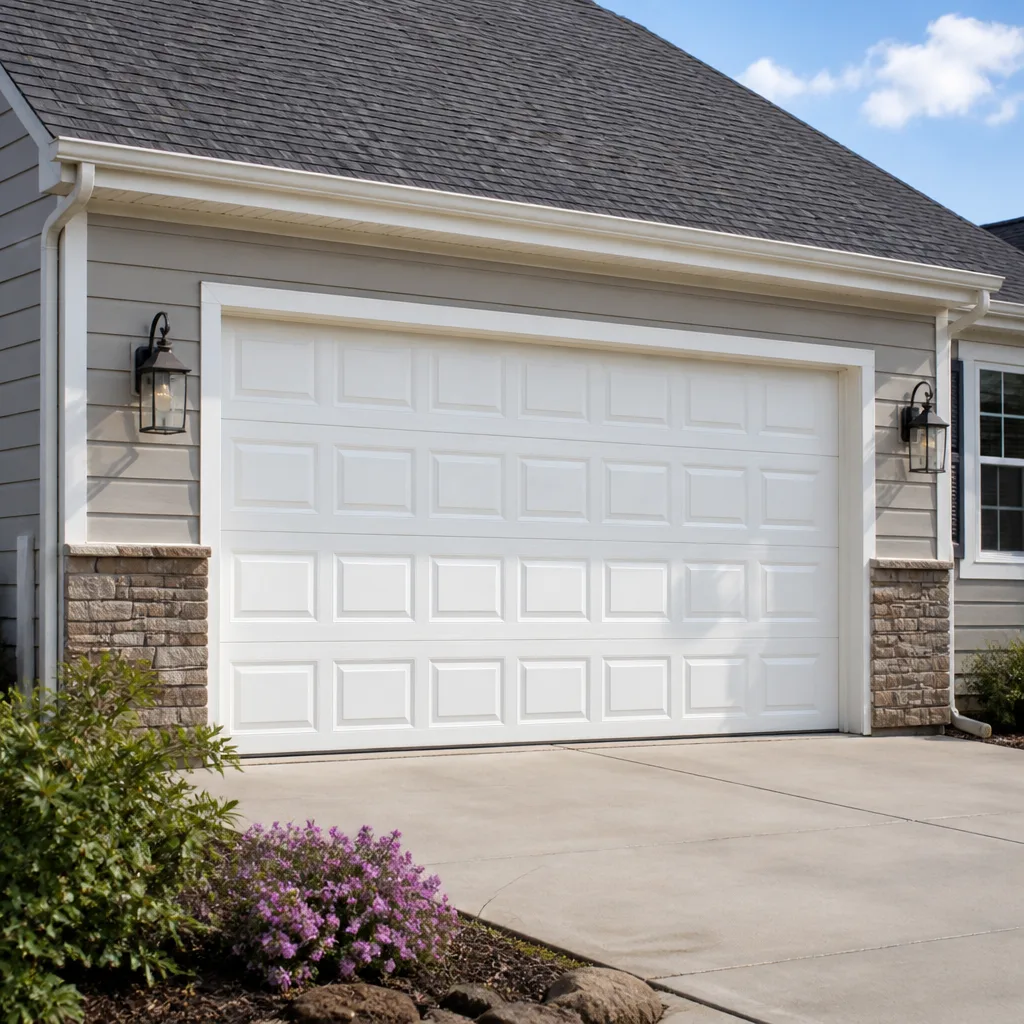 Raised-panel steel
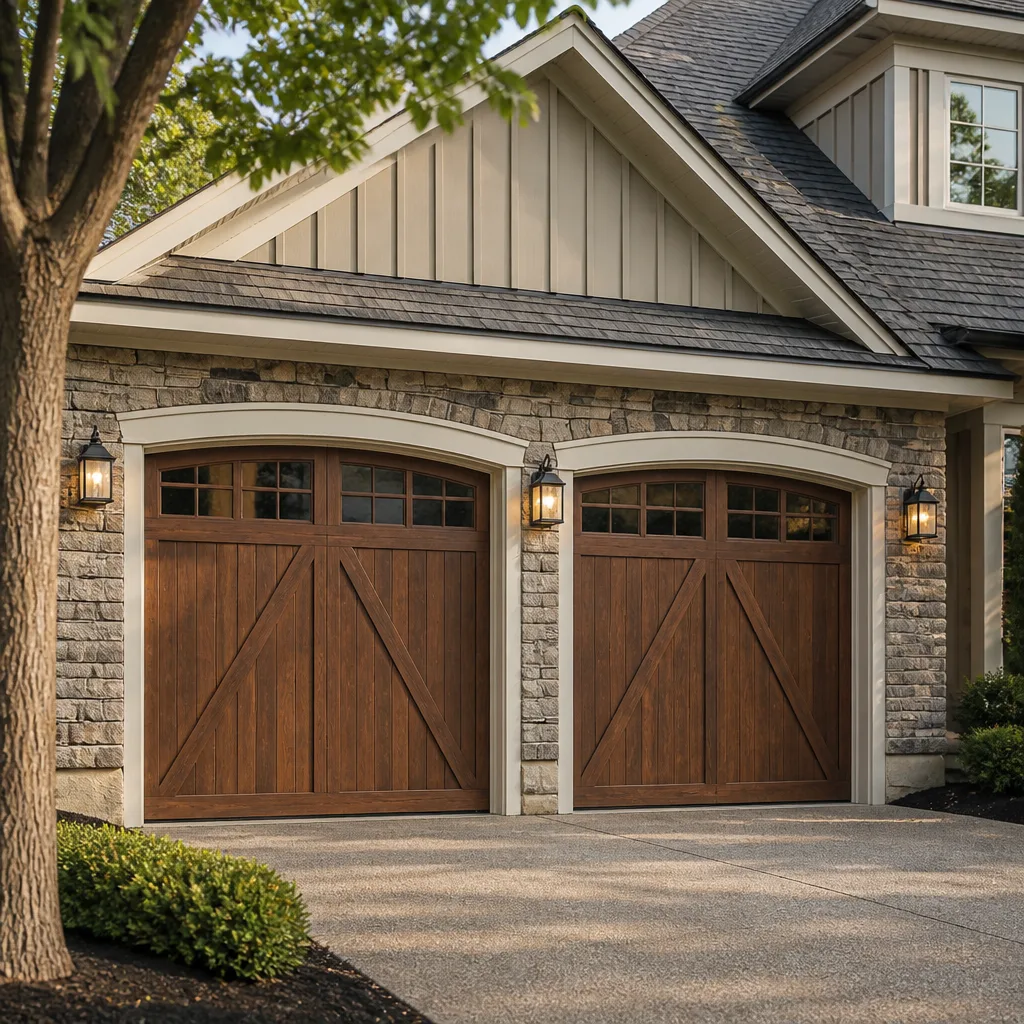 Carriage house
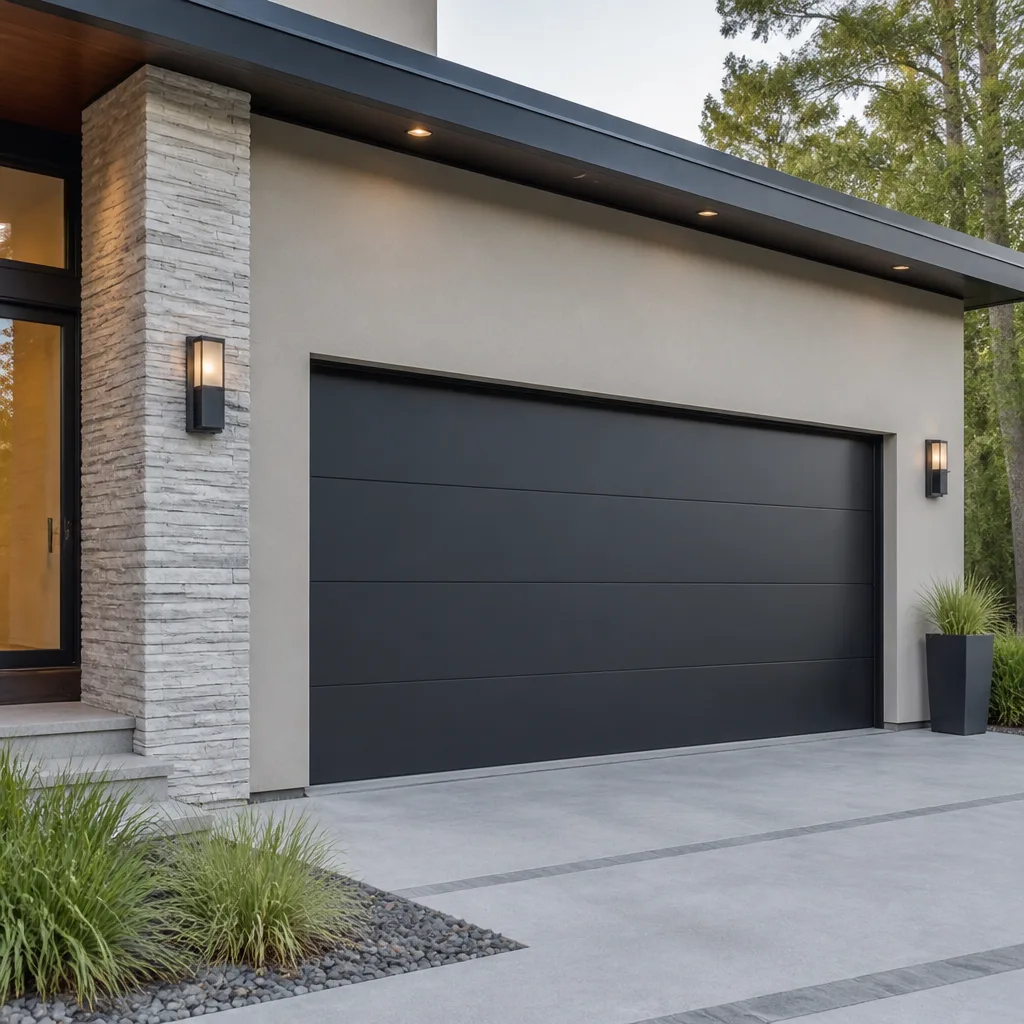 Modern flush
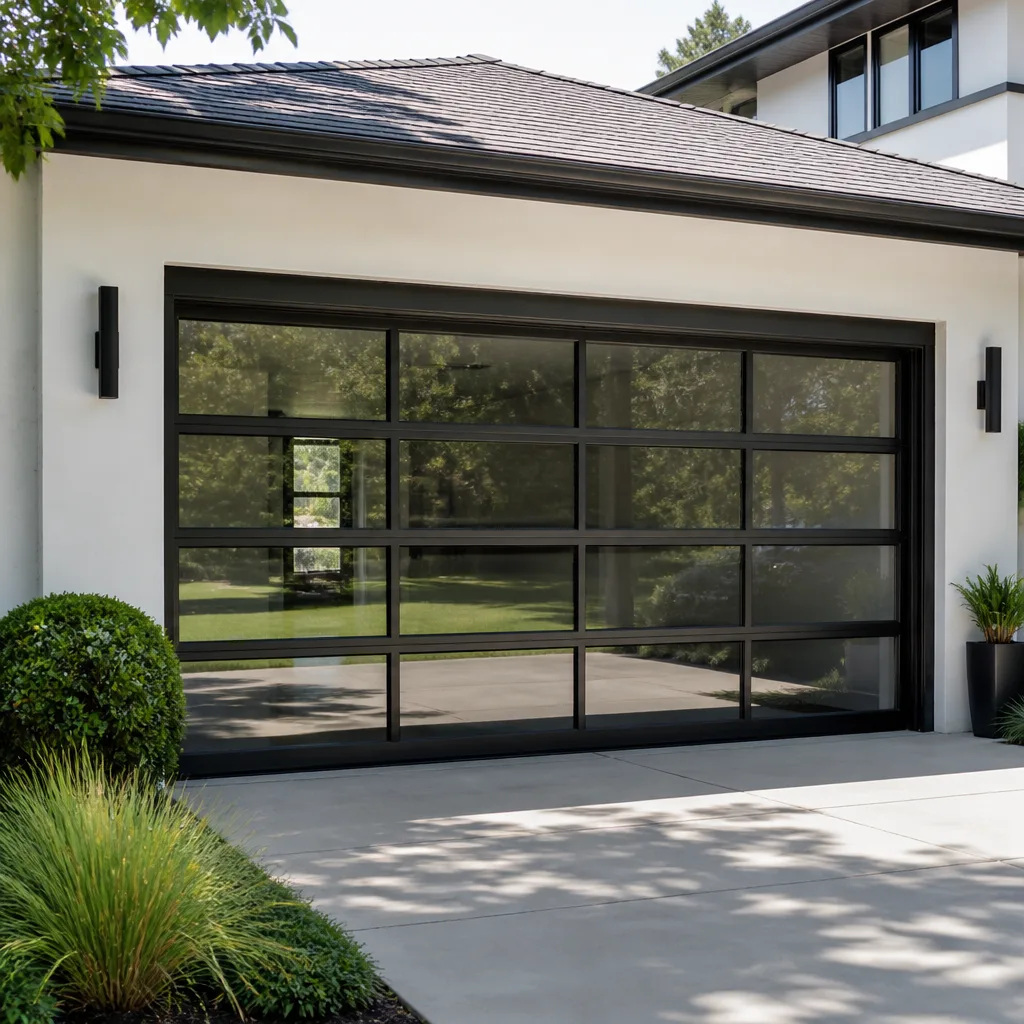 Full-view glass
 LiftMaster openers
 Chamberlain openers
Full 25-point door and opener safety check with every visit - springs, cables, rollers, tracks, and your LiftMaster or Chamberlain opener included
You get a price before we start. It does not change when the pro arrives.
Get your free estimateGarage Door Warning Signs: An Auburn Homeowner’s Reference Guide
If your garage door is louder than it was two years ago, that’s not normal wear. That’s a component telling you it’s about to fail. Most Auburn homeowners miss the message because they hear the door every single day. The grinding becomes background noise. The slow lift on a cold morning becomes “just how it is.” Then one Tuesday the door stops halfway up and stays there. This guide maps the sounds, sights, and habits you’ve learned to ignore onto the specific parts causing them. You’ll learn which signs mean schedule a repair this week, which mean stop using the door today, and how to tell an opener problem from a door problem without putting your hands anywhere dangerous.
Quick Answer
The main warning signs of a failing garage door are unusual noise (grinding, popping, squealing), a door that moves unevenly or reverses on its own, visible rust streaks or a widening gap at the bottom, and sluggish operation in cold weather. Loudness, uneven travel, and slow cold-weather movement usually point to worn rollers, tired springs, or a straining opener. Any sign of a frayed cable or a door that slams down means stop using it and call a specialist.
Styles & brands we work with
- Raised-panel steel
- Carriage house
- Modern flush
- Full-view glass
- LiftMaster openers
- Chamberlain openers
Table of Contents
- What the sounds are telling you: a symptom-to-cause map
- Visual warning signs that are easy to rationalize away
- The “slow in cold weather” problem Auburn homeowners normalize
- Opener problem or door problem? How to tell without touching anything
- Which warning signs are same-week fixes and which mean stop now
- A seasonal check routine for Auburn’s wet months and dry summers
- Why brand knowledge changes the diagnosis
What the sounds are telling you: a symptom-to-cause map
A garage door makes a predictable set of noises when it’s healthy: a low hum from the opener, a soft roll of the panels, a gentle click at the end of travel. Anything outside that set is information. The trick is matching the sound to the part, because a squeal and a pop can come from completely different components and cost very different amounts to fix. Here’s how we read the most common complaints.
- Grinding, like metal on grit: Usually dry or worn rollers, or a torsion tube with dry bearings. Left alone, grinding rollers flat-spot and start straining the opener.
- Popping or a loud bang from above the door: This is the sound of a torsion spring under load. A single pop can be a spring that has just broken. If you heard a bang and the door suddenly feels impossibly heavy, stop and read the triage section below.
- High-pitched squealing: Friction at the hinges or rollers, or a dry torsion tube. Squealing that appears only at one point in the door’s travel usually means a specific hinge or roller is binding.
- Rattling that got worse over months: Loose hinge plates, a slack chain on a chain-drive opener, or worn bushings. Rattles rarely fail dramatically, but they accelerate wear on everything around them.
- Clicking that repeats: Often a gear or sprocket inside the opener, especially on older units. A garage door opener repair visit can confirm whether it’s the drive gear or something in the door itself.
Notice that none of these require you to disassemble anything. You can walk out, run the door, and listen. That’s the whole diagnostic step a homeowner should take on their own. In our experience, the sound a homeowner describes on the phone is often enough to predict what we’ll find, which is why we ask people to describe it in plain words rather than guess at the cause. A door serviced by Auburn Garage Door Repair Co gets a noise diagnosis on the first visit, not a parts swap and a hope.
Visual warning signs that are easy to rationalize away
Sound is the loudest signal, but the door also shows its condition on the surface. These are the signs Auburn homeowners walk past every day and explain away. Each one points at something specific.
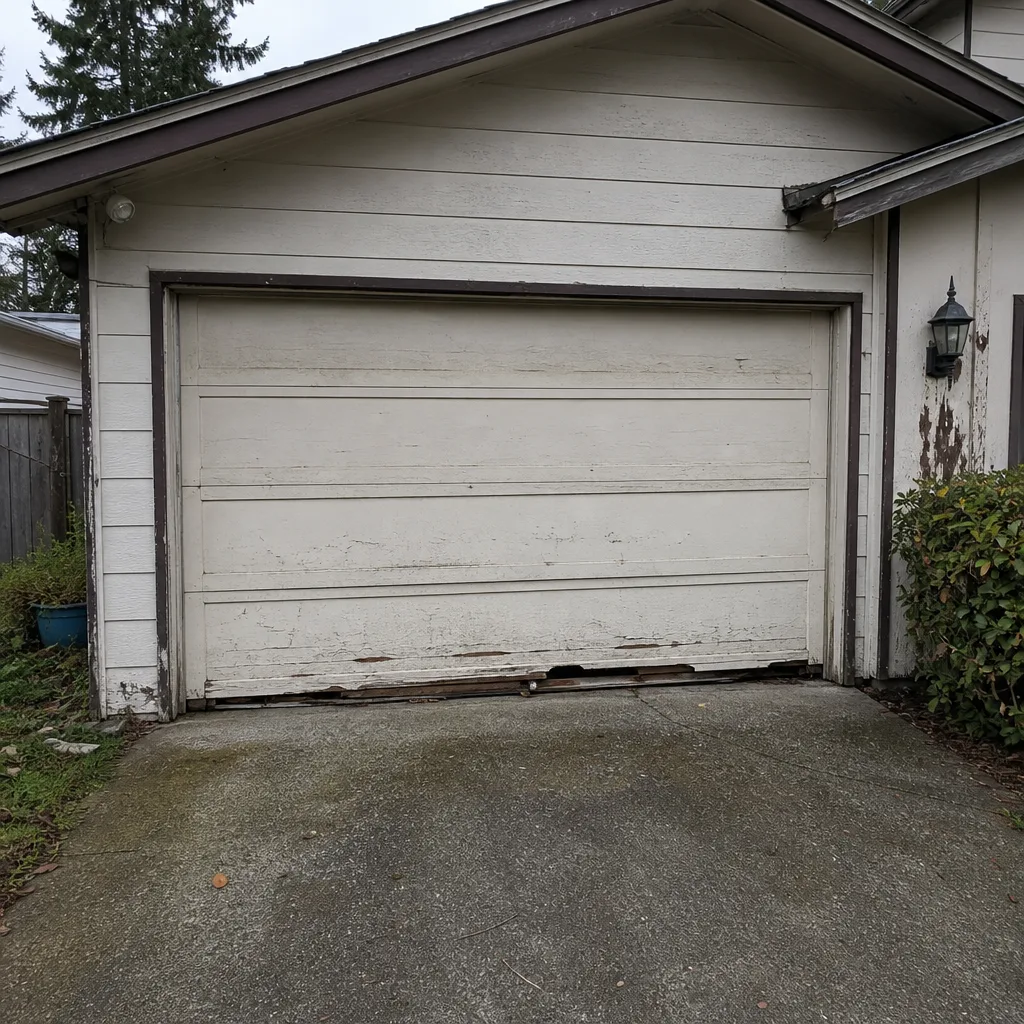
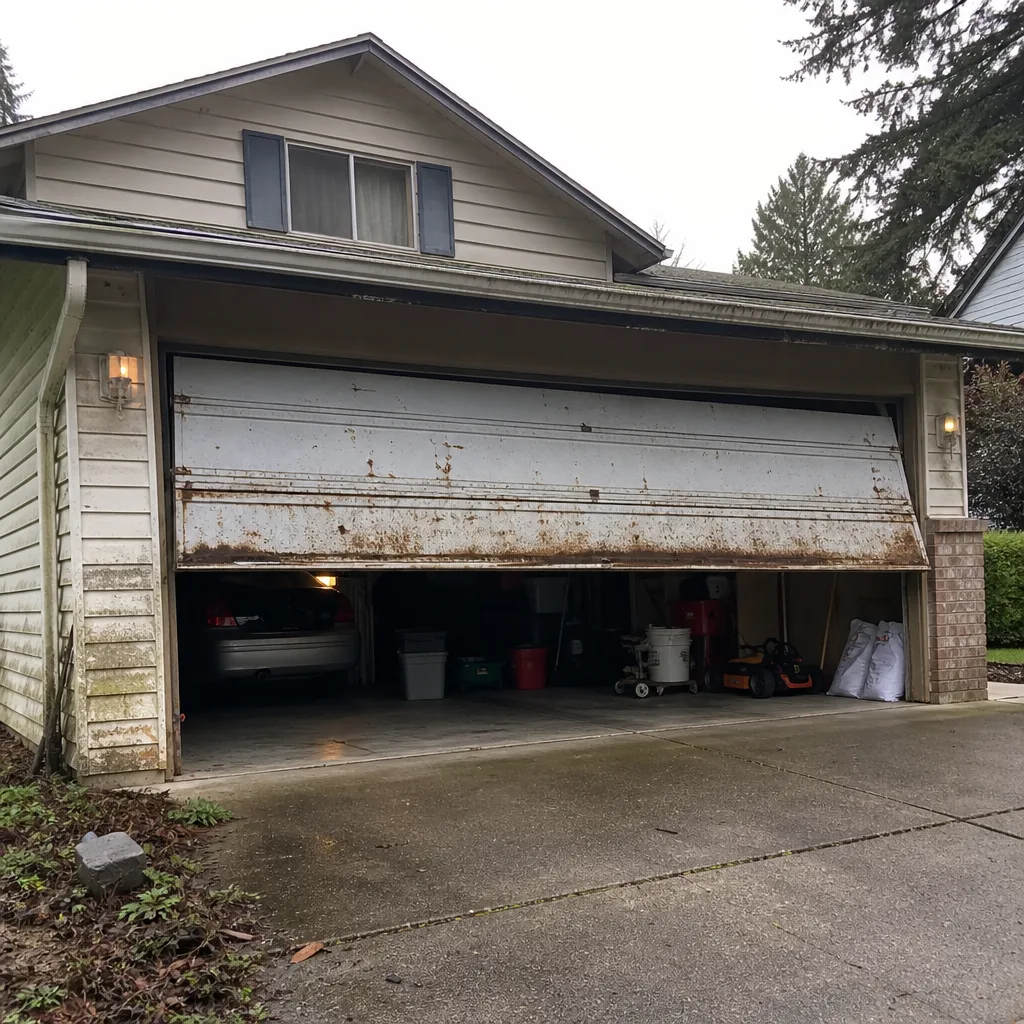
- Rust streaks on the panels or along the bottom edge: Auburn’s wet winters push moisture into every seam. Rust at the bottom edge of a steel door means water is sitting where the panel meets the ground. Rust higher up, near the hinges, usually means a worn finish that lets damp air in. Rust is cosmetic at first and structural later, so it’s worth catching early.
- Paint bubbling at the panel seams: Bubbling is trapped moisture under the paint film. On a steel door it can signal the start of corrosion under the surface. On a wood door it means water is getting in and the wood is swelling.
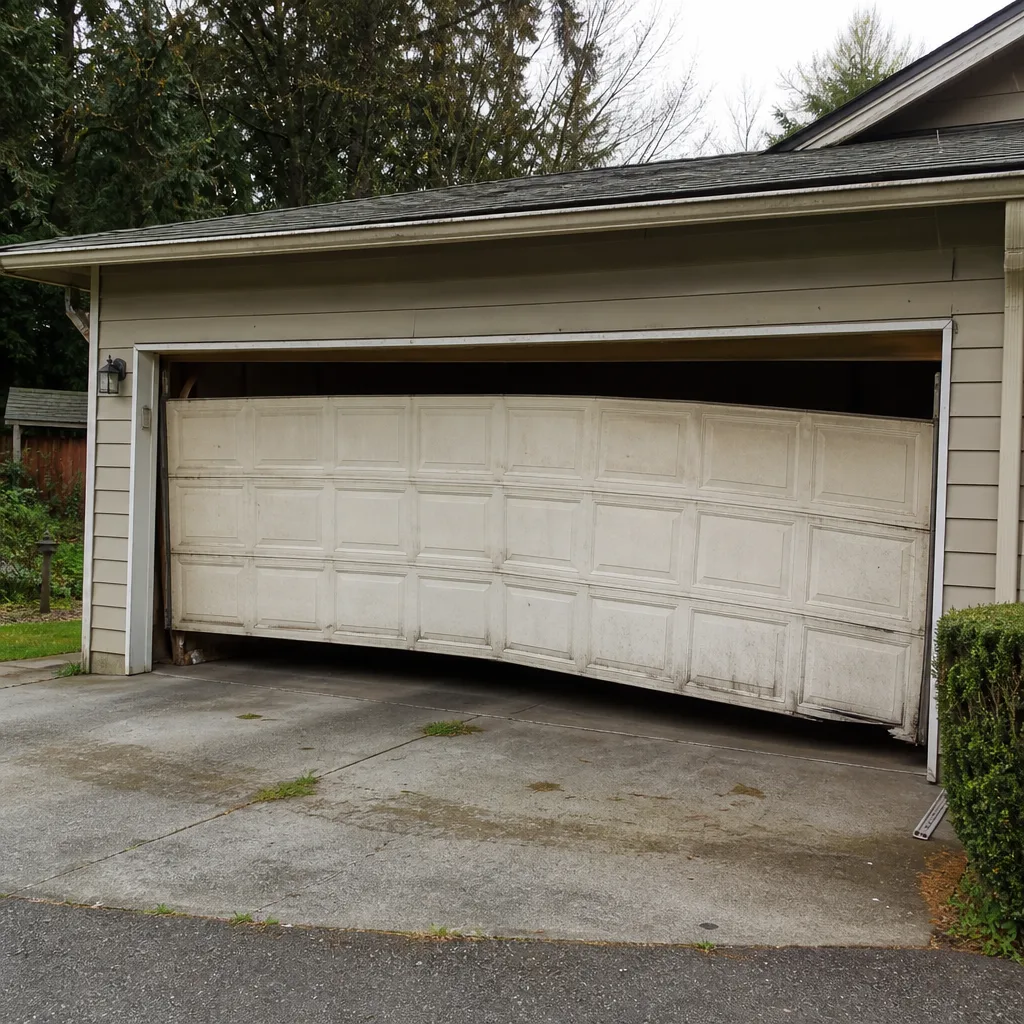
- An uneven gap at the bottom: If the gap between the door and the floor is wider on one side, the door is out of level. That’s often a sign of a tired spring, a stretched cable, or a track that has shifted. It also lets cold air and water in.
- A door that looks tilted when closed: Stand back and look at the horizontal lines. If they’re not level, the two sides of the door are being lifted unequally. That’s a spring or cable issue, not a cosmetic one.
- Bent or kinked tracks: A track that isn’t straight will drag on the rollers. A dented track can also let a roller pop out entirely, which is a stop-using-it situation.
- Loose or missing hinge screws: Small, easy to overlook, and a sign the door’s hardware is working loose. Tightening them is a reasonable homeowner task; a hinge that won’t hold a screw is not.
None of these are emergencies on their own. Together, though, they tell you the door is drifting out of adjustment and spending more energy than it should to open. That extra effort is what wears out the next component.
The “slow in cold weather” problem Auburn homeowners normalize
Here’s the one we hear most. “It’s always a little slow when it’s cold, that’s normal, right?” It isn’t. A garage door should move at roughly the same pace in January as it does in July. The slowdown you’ve learned to accept is usually spring fatigue, and it’s the single most overlooked warning sign on this list.
Torsion and extension springs hold the door’s weight so the opener only has to guide it. As a spring ages, it loses lifting force. In warm weather the difference is small enough to ignore. When the temperature drops, the metal contracts and the grease in the tracks thickens, and the door needs even more lift. A tired spring can’t give it. The door moves slowly, the opener strains, and the motor runs hotter and longer. Auburn’s cold snaps are short, but they’re exactly when a marginal spring gives up. The door that was “always a little slow in winter” is the door that breaks in the first cold week.
You can test this idea without touching anything dangerous. Run the door on a normal day and time how long a full open takes. Then listen for the opener’s pitch. A motor that sounds like it’s working hard on a door with no obvious drag is telling you the spring isn’t pulling its weight. That’s a same-week call, not a wait-and-see. For the specific repair, our garage door spring repair page explains what the job involves and why it’s a specialist’s task.
Opener problem or door problem? How to tell without touching anything
A large share of what looks like an opener failure is actually a door that got too heavy for the opener to lift. The two failures look similar from the driver’s seat, but they’re completely different jobs, and knowing which one you’re facing saves you a wrong guess. You can sort most cases with the door disconnected from the opener, using only the release cord. Never reach into the mechanism or put your hands near the springs or cables, and never try to force a stuck door up by hand.
- Pull the release cord (the red handle hanging from the opener rail) so the door is disconnected from the motor. This is safe to do; it just releases the trolley.
- Lift the door about halfway by the handle and let go gently. A healthy door with good springs will hang roughly where you leave it, because the balance system is holding it. If the door wants to fall, the springs are weak or broken. That’s a door problem.
- Reconnect the door to the opener and run it. If the door itself balances fine by hand but the opener stumbles, reverses, or barely moves it, the problem is in the opener. That’s a motor, logic board, drive, or sensor issue.
- Look at the safety sensors at the bottom of the tracks. If one is bumped, misaligned, or has a dusty lens, the door will refuse to close or will reverse immediately. That’s the cheapest possible fix and worth checking first.
If the balance test tells you the door is heavy, stop the diagnosis there and call a specialist. Springs are under extreme tension, and a failed one can cause serious injury. We work on the drive brands most Auburn homes already have, including LiftMaster, Chamberlain, Genie, and Craftsman, so we can usually identify the fault from a description and confirm it on arrival.
Which warning signs are same-week fixes and which mean stop now
Not every sign is equally urgent. Sorting them into “schedule it this week” and “stop using the door today” is the most useful thing a homeowner can do, because it prevents the small fix from becoming the expensive one. Here’s the split we use.
Stop using the door immediately
- A snapped spring. You’ll usually hear it. The door will feel too heavy to lift by hand and the opener may not raise it. Don’t force it.
- A frayed or broken cable. Cables are under tension and can whip when they fail. A visible break or a frayed strand means the door doesn’t get used until it’s fixed.
- A door that slams down or falls faster than it should. The balance system has failed and the door is no longer controlled.
- A door that comes off its track or hangs crooked. Running it again can bend panels or drop the door.
- Any part of the door hanging loose above head height. Loose hardware under load is a hazard.
Schedule within the week
- Grinding, squealing, or rattling that has gotten worse over time.
- A door that’s slow in cold weather or takes longer to open than it used to.
- An opener that reverses for no obvious reason, or a remote that needs repeated presses.
- An uneven gap at the bottom, or panels that look slightly out of level.
- Rust streaks or paint bubbling that suggest moisture is getting in.
If you’re unsure which category a sign falls into, describe it over the phone rather than guess. A two-minute conversation sorts most of these. When the issue is clearly on the door side, a garage door repair visit starts with a full inspection, and the written estimate tells you what the job costs before any work begins.
A seasonal check routine for Auburn’s wet months and dry summers
Auburn runs wet and gray for months and then dries out hard in summer. That swing is rough on a garage door, which is a big steel rectangle that expands, contracts, and takes on moisture on the same schedule. A short check twice a year catches most of the problems in this guide before they turn into a call.
- Walk the perimeter with a flashlight. Look at the bottom seal for cracks and the panel edges for rust or bubbling paint. Auburn’s wet season is when moisture does its damage, so this check matters most in late fall and again in early spring.
- Listen to a full open and close. Note any new sound compared to six months ago. Compare against the sound map above.
- Do the balance test. Disconnect the door from the opener and lift it halfway by hand. It should feel manageable and stay roughly where you leave it. If it doesn’t, the springs need attention.
- Check the safety sensors and the wall button. Make sure the sensors at the bottom of the tracks are aligned and clean, and that the wall control works.
- Check the weather seal and the frame. A torn bottom seal lets water in under the door. That water sits on the floor and rusts the bottom panel from the inside.
Two checks a year, ten minutes each, will catch the failures that cost the most. Everything that involves adjustment, springs, or cables belongs with a trained technician. Our technicians have up to 14 years of experience, and that experience is mostly spent on exactly this kind of early-warning inspection.
Why brand knowledge changes the diagnosis
Garage doors are not interchangeable. A Clopay steel door and an Amarr door have different panel profiles and balance the same way only by coincidence. An opener from Chamberlain and one from Genie use different logic boards, different drive systems, and different sensor behaviors. If the person diagnosing your door doesn’t know the equipment, they fall back on guesswork and parts swapping. We work on the brand already in your garage rather than on an average of all brands.
That matters most at the diagnosis stage. A Genie opener that reverses on its way down and a Chamberlain that does the same might have different causes, and the fix for one won’t fix the other. On the door side, we handle Clopay, Amarr, Wayne Dalton, and Raynor equipment, which covers most of what’s installed in Auburn homes. On the drive side, we’re familiar with LiftMaster, Chamberlain, Genie, and Craftsman. The practical result is fewer visits: same technician, same visit, correct diagnosis the first time. It also means we know when a repair is the right answer and when it genuinely isn’t, which is the whole point of a specialist.
Common Mistakes to Avoid
- Treating a louder door as “just getting older.” Noise is information, and a door that’s gotten louder has a component wearing out. Waiting until it fails usually pulls the opener or the panels into the repair.
- Ignoring the slow-winter-door habit. A door that only drags in the cold is telling you the springs are losing lift. In Auburn, where cold snaps hit fast, that’s the sign most likely to turn a spring job into a stuck-door call.
- Spraying lubricant on everything. Grease on the tracks will collect grit and make the door worse. Lubricant belongs on rollers, hinges, and the torsion tube, not on the track surface. When in doubt, let a technician handle it.
- Letting rust and bubbling paint go for another season. Both mean moisture is getting into the panel. Rust spreads along a seam quickly in Auburn’s wet months, and a panel replacement is much more expensive than an early seal fix.
- Adjusting the springs yourself. This is the one mistake that can seriously hurt you. Springs are under extreme tension, and a slip can cause serious injury. Spring replacement is a job that demands a specialist.
- Calling the first general handyman who answers. A door diagnosis depends on brand knowledge and experience with balance systems. A generalist who also does doors is more likely to guess than to diagnose.
- Assuming the opener is the problem. A heavy door looks like a weak opener from the driver’s seat. Do the balance test before you spend money on a new motor you don’t need.
See the difference
 Before
 After
 Before
 After
 Before
 After
When to Call a Professional
Call a professional if you see a snapped spring, a frayed or broken cable, a door hanging off its track, or a door that slams down instead of lowering smoothly. Those are stop-using-it-today signs, and running the door again can turn a repair into a replacement. Call within the week if you hear grinding or popping that has gotten worse, if the door has slowed in cold weather, if it’s out of level, or if the paint is bubbling at the seams. And call rather than guess if you can’t tell whether the door or the opener is at fault. Auburn Garage Door Repair Co offers free estimates in Auburn – call (833) 680-0666. We answer 24/7. Fast dispatch from 7am to 7pm, Sunday through Friday, and we’re closed on Saturday. The price is quoted and agreed before any work starts.
Frequently Asked Questions
Unusual noise, especially grinding or popping that has gotten worse over months, is the most common warning sign. Homeowners get used to the sound and stop hearing it, so the first step is listening to a full open and close and comparing it to what you remember. If it’s louder now than it was a year ago, it’s worth a call. Call (833) 680-0666 for an exact quote – estimates are free.
No. A garage door should move at about the same pace in winter as in summer. A door that only drags in the cold usually has a tired spring that has lost lifting force, and the cold is just the moment it shows. That’s a spring diagnostic, not an opener replacement. Book a visit before the next cold snap.
Pull the red release cord and try to lift the door by hand. If it feels too heavy and won’t stay where you leave it, the springs are weak and the problem is the door. If the door balances fine but the opener stumbles, reverses, or won’t move it, the issue is in the opener or its sensors. Don’t reach near the springs or cables when doing this.
Spring replacement is priced per job by a written estimate, and a matched pair of springs is usually replaced together. We give a free, written estimate before any work starts, and that written price is what you pay. For an exact figure, call (833) 680-0666 – estimates are free.
Rust along the bottom edge means water is sitting where the panel meets the floor, which is common in Auburn’s wet months. It usually points to a worn bottom seal letting moisture in. Left alone, rust travels up the seam. Replacing the seal early is far cheaper than replacing a panel.
The local pros we connect you with are licensed and insured as their state requires, and our technicians have up to 14 years of experience. We work on the brand already in your garage, so the diagnosis fits the equipment you have. Call (833) 680-0666 for a free estimate.
For a snapped spring, a broken cable, or a door that won’t close, we offer same-day service and fast dispatch from 7am to 7pm, Sunday through Friday. We’re closed on Saturday, so a call on Saturday gets booked into the next opening on Sunday. We answer 24/7, so call (833) 680-0666 and describe what you’re seeing.
No. The price is quoted and agreed before any work starts, and the written estimate sets the final price. If we find something that changes the job once we’re on site, we explain it and get your approval before doing anything. Call (833) 680-0666 for a free estimate.
The Bottom Line
Garage door warnings are rarely sudden. The grinding, the slow lift in cold weather, the rust at the bottom edge, the uneven gap, and the louder rattle are all the door telling you what’s about to fail. Catch them in the schedule-this-week stage and the repair is usually small and contained. Ignore them and the same warning becomes a stuck door, a bent panel, or a strained opener. The five-minute checks in this guide, twice a year, will catch most of what matters. For the rest, a specialist who knows your brand will figure it out in one visit. Use the sound map, the balance test, and the urgency split above as your reference, and call when a sign lands in the stop-now column.
Call (833) 680-0666 for a free estimate. We answer 24/7. Fast dispatch from 7am to 7pm, Sunday through Friday, closed Saturday.
Written by the team at Auburn Garage Door Repair Co.